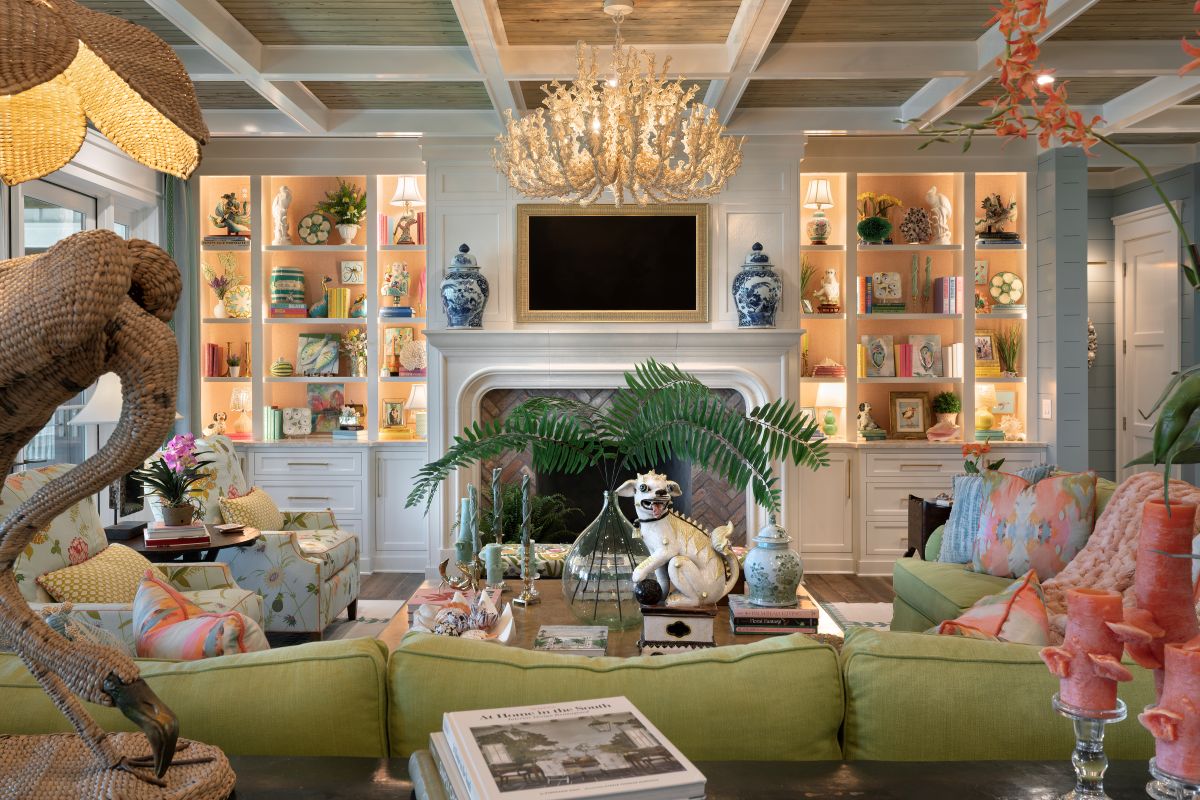
A DeBordieu Colony home in Georgetown, South Carolina, came together around a Palm Beach-style interior design brief its owner had worked out before she ever walked into the CHD Interiors showroom: flamingo pink, coral, mint green, yellow, and blue, and bold patterns on nearly every surface. Our owner and lead designer, Lance Griffith, and the design team built that vision out room by room, working with her to ground all that color in reclaimed wood, antiques, and shapes that repeat.
The client came to the Lowcountry from the Cashiers area of North Carolina, where she had spent years in a home she loved. But she knew she wanted something different from the mountain home she was leaving. What she wanted was a true Palm Beach-style home: color, pattern, florals, and no apology for any of it. She arrived with her palette already chosen, along with fabrics and fixtures she had sourced from vendors abroad.
“She was probably the most color-confident client I’ve ever had,” Lance says. “She had this whole thing scoped out in her head when she came into the store. She has a great eye and a great sense of color and scale.”
A house built this way raises an obvious question. Turquoise and lime green in one room, purple and mint in the next, a different palette behind nearly every door… how can so many colors coexist in one space? The answer lies in the decisions underneath the color, and it starts with how this style changes when it moves out of Florida.
What Palm Beach-Style Interior Design Looks Like in the Lowcountry
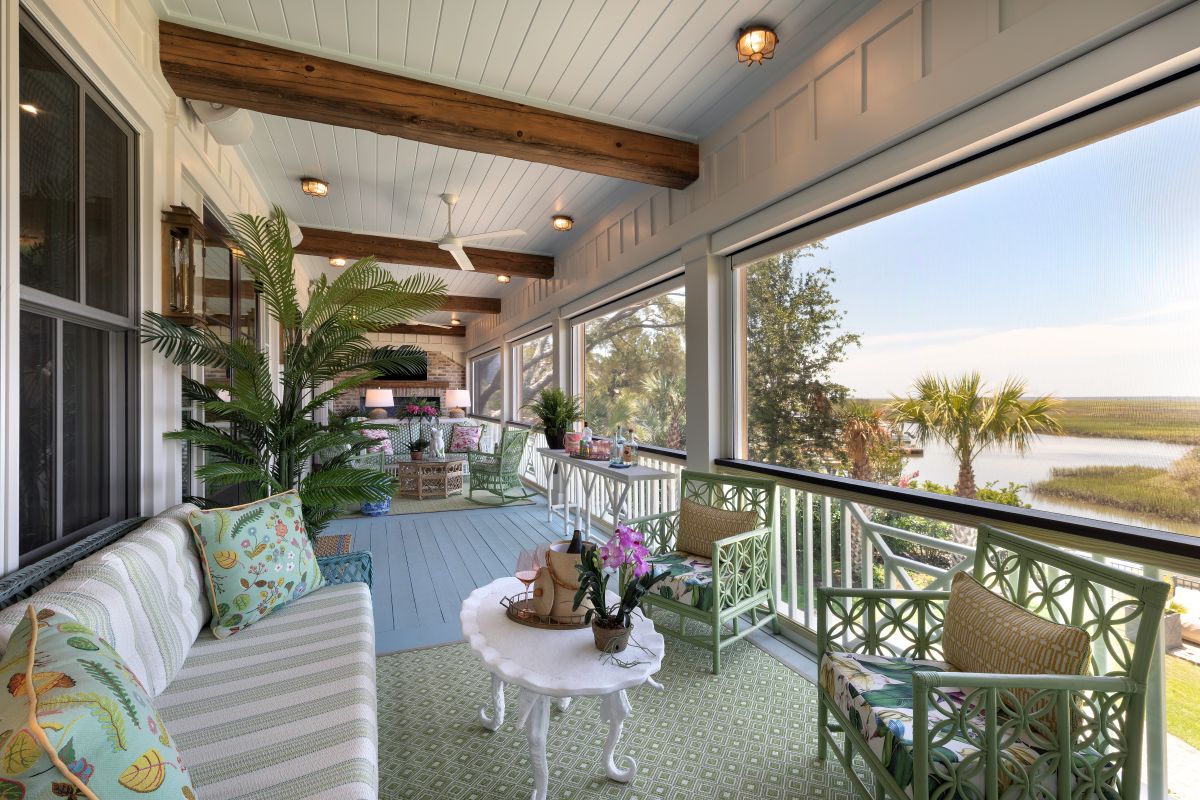
Palm Beach interior design is a high-color, high-pattern approach that came out of resort decorating in Palm Beach, Florida. It runs on saturated brights like pink, coral, mint, and turquoise, along with botanical and floral prints, faux bamboo and rattan furniture, painted and lacquered finishes, brass hardware, and trellis or lattice motifs. Much of its furniture vocabulary dates to the 1950s and 1960s, when the look took the form people recognize today.
In Florida, that palette usually sits against crisp white stucco, tile or terrazzo floors, and hard sun. This house gave it something else to work against. Ceilings are vaulted and planked in natural wood or coffered with wood insets. Reclaimed beams frame the doorways and cross overhead. Brick pavers cover the kitchen floor, wood laid in a herringbone pattern runs through the foyer, and wood wall treatments wrap the living and dining walls.
That changes what the color does. Flamingo pink against white stucco reads crisp and graphic. The same pink against a rough beam and a brick floor reads softer, because the wood and masonry already carry age and warmth into the room. The brights stop announcing themselves and start looking like they belong.
The setting works its way in through subject matter, too. DeBordieu Colony sits in Georgetown County between the Atlantic and North Inlet, an estuary of marsh grass and tidal creeks, and that view fills the windows on the porch and in the primary bedroom. Inside, a great blue heron presides over the bar. Coral-form chandeliers light the dining and living rooms. Botanical wallcoverings climb the walls of the powder room and guest baths.
Setting the Tone in the Foyer with Antique Wood and Reclaimed Beams
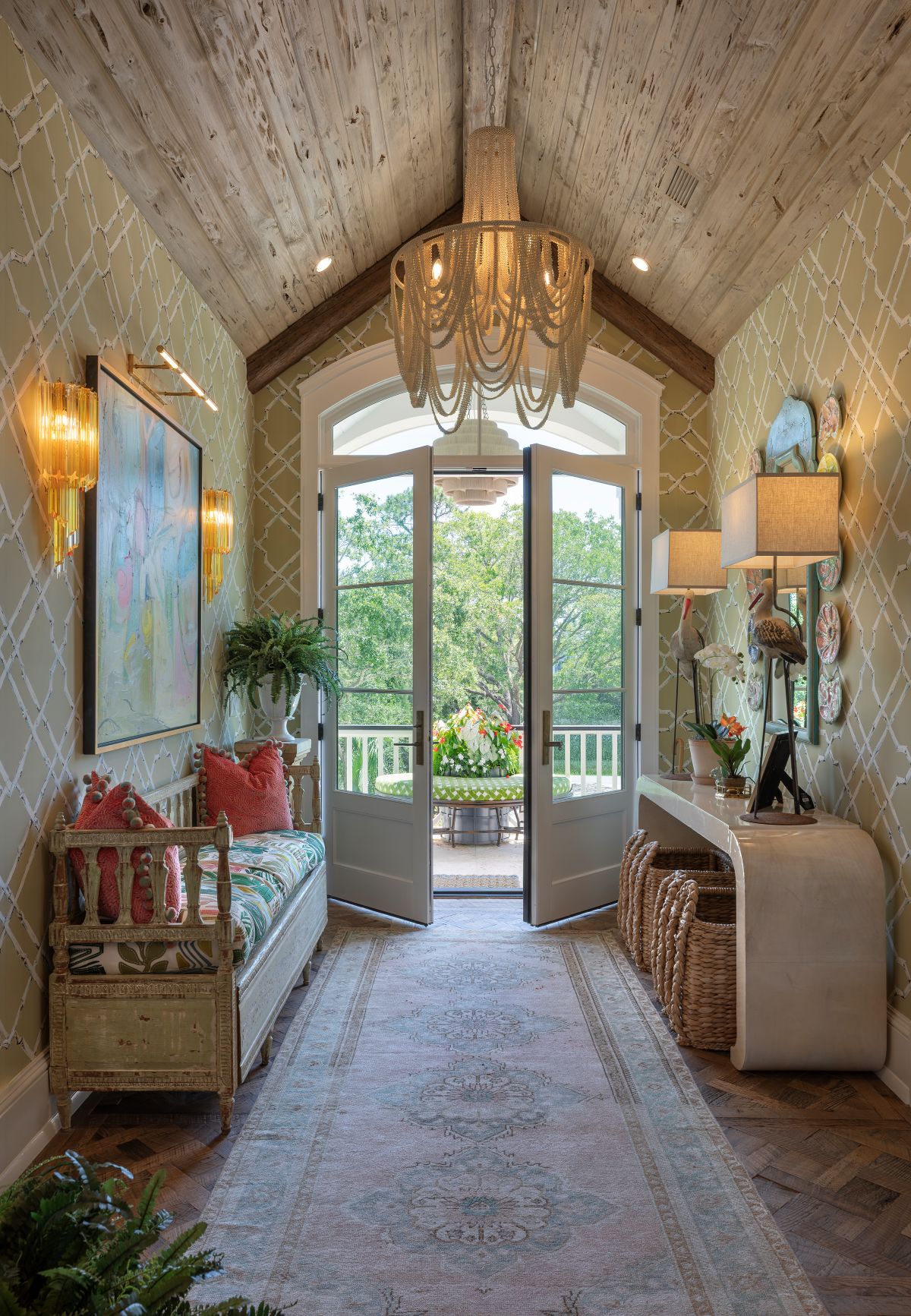
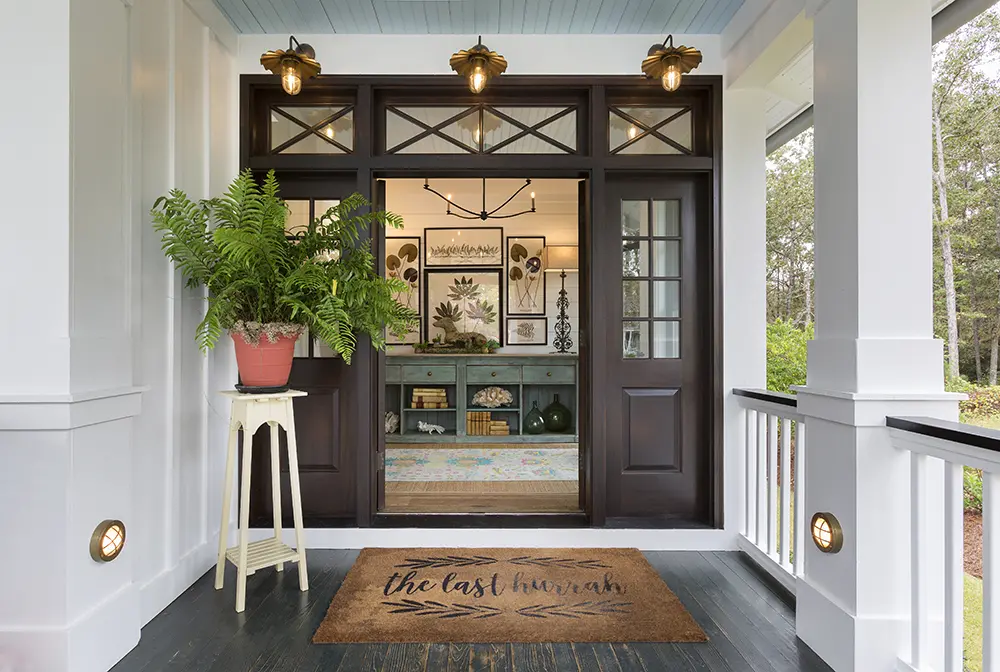
“The things that are most impactful,” says Lance, “is seeing the foyer and seeing the way we worked that together with the beams, with the antique wood.” A rough beam runs the length of the vaulted plank ceiling, and herringbone wood covers the floor beneath it.
The color here stays soft. A bamboo lattice pattern in white covers the walls over a pale citron ground, and the brighter notes arrive in small doses through coral pillows on an antique painted bench and amber glass sconces flanking a pastel abstract painting. A bead chandelier hangs from the vault and painted plates climb the wall above the console. Palm Beach and the Lowcountry meet each other at the front door.
Designing Whole-House Color Palette That Changes in Every Room
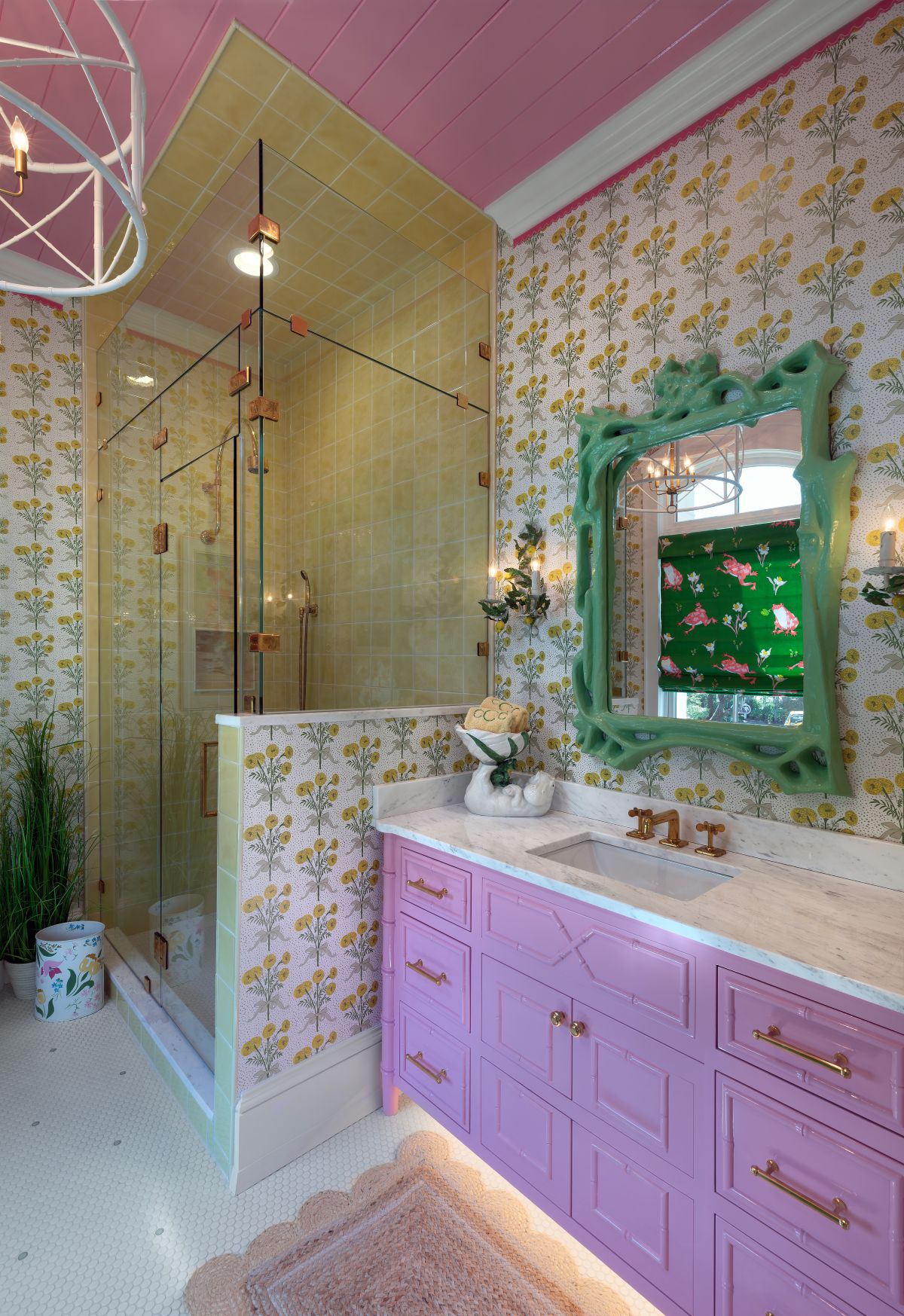
Rather than carrying one palette through the house, this project gives each room its own. A yellow, green, and pink bedroom. A purple, green, and pink bath. Coral and green in the laundry room. Colors reappear across rooms, but never in the same combination or the same proportion twice.
What holds them together is shape, material, and texture. Faux bamboo turns up on beds, vanities, mirrors, and case goods. Unlacquered brass repeats at every faucet and pull. Decorative plates climb the walls in the dining room and the foyer. Scalloped edges appear on a lantern, a shade, a bath rug. This vocabulary crosses rooms that share no colors at all, so the eye keeps finding something familiar even when the palette resets.
Mixing Bold, Palm Beach-Style Prints by Varying the Scale
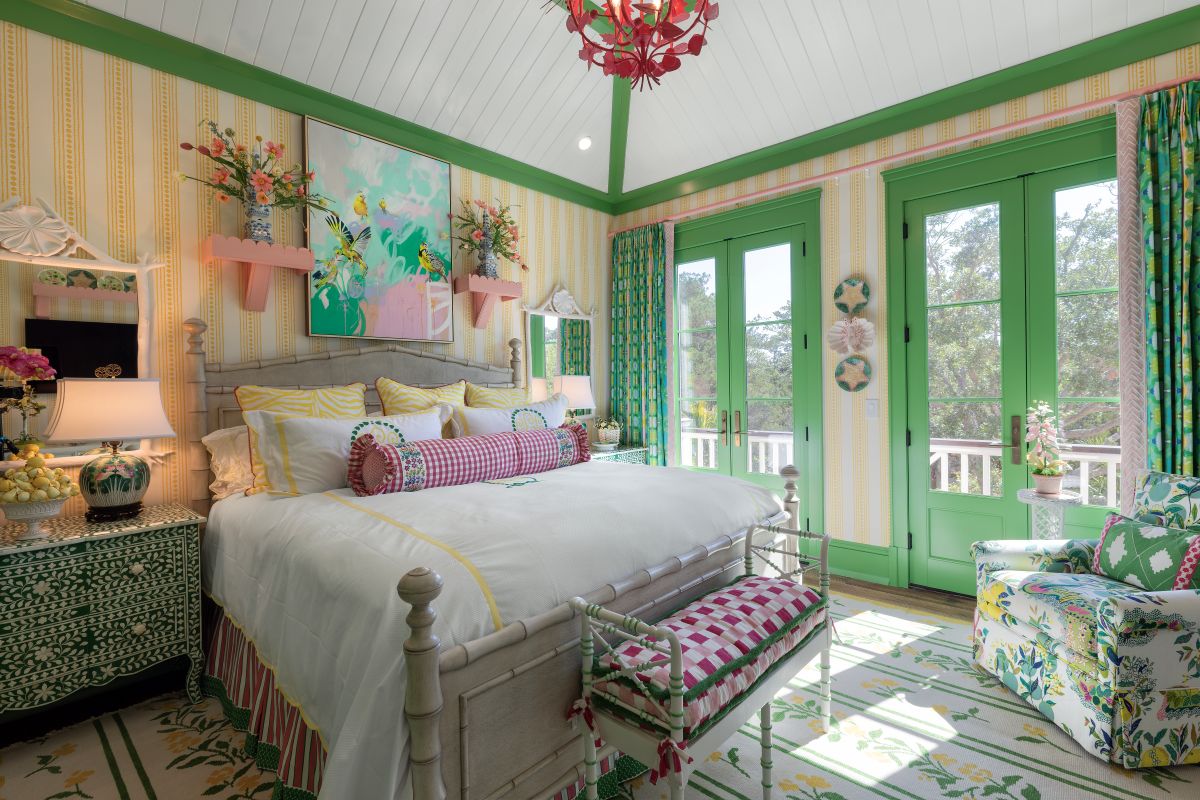
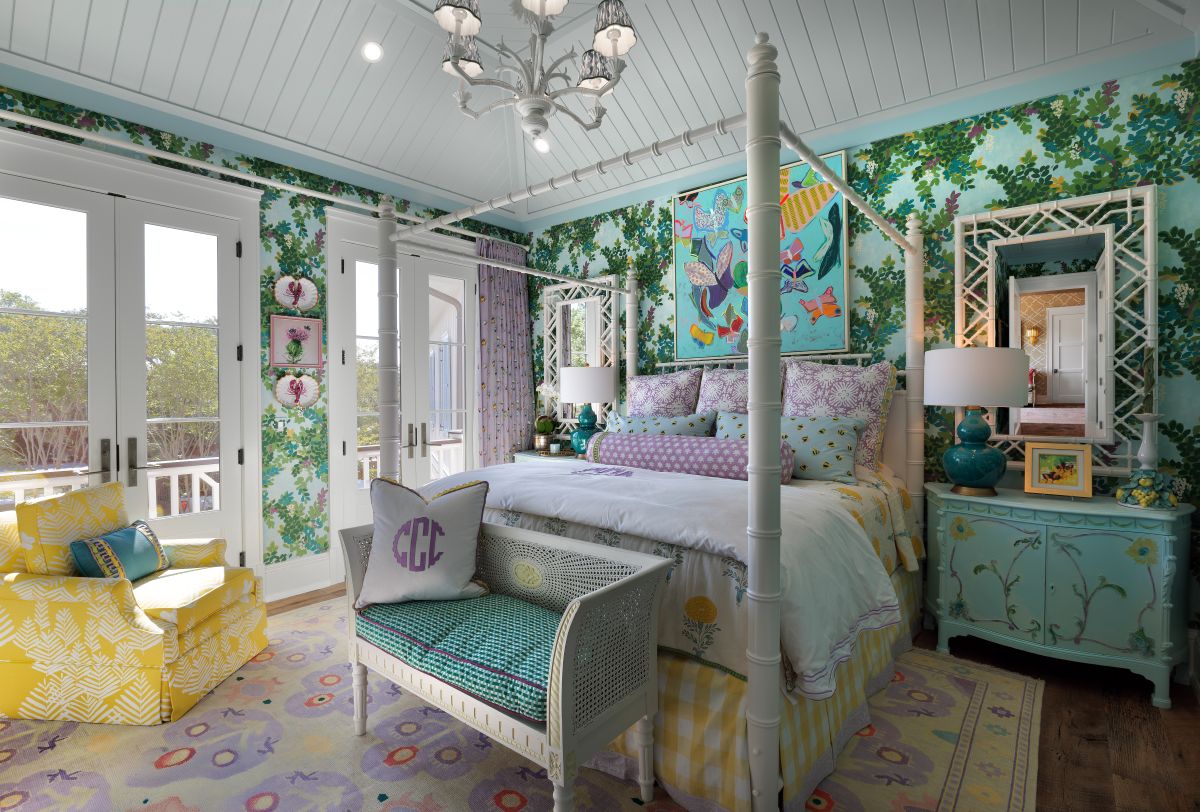
Rooms in this house often run five or six patterns at once, and scale is what keeps them from competing. Because no two prints occupy the same size range, the eye reads one as the backdrop and the others as detail instead of trying to sort out a tie.
A shared palette is the other element to successfully mixing patterns in interior design. Every print in a given room draws from the same three or four colors, so a gingham bolster and a tropical print wallpaper can sit inches apart and still look related. That is also what lets solid painted trim and furniture pull a room together without needing to match anything exactly.
Grounding a Colorful Kitchen Redesign in Brick and Wood
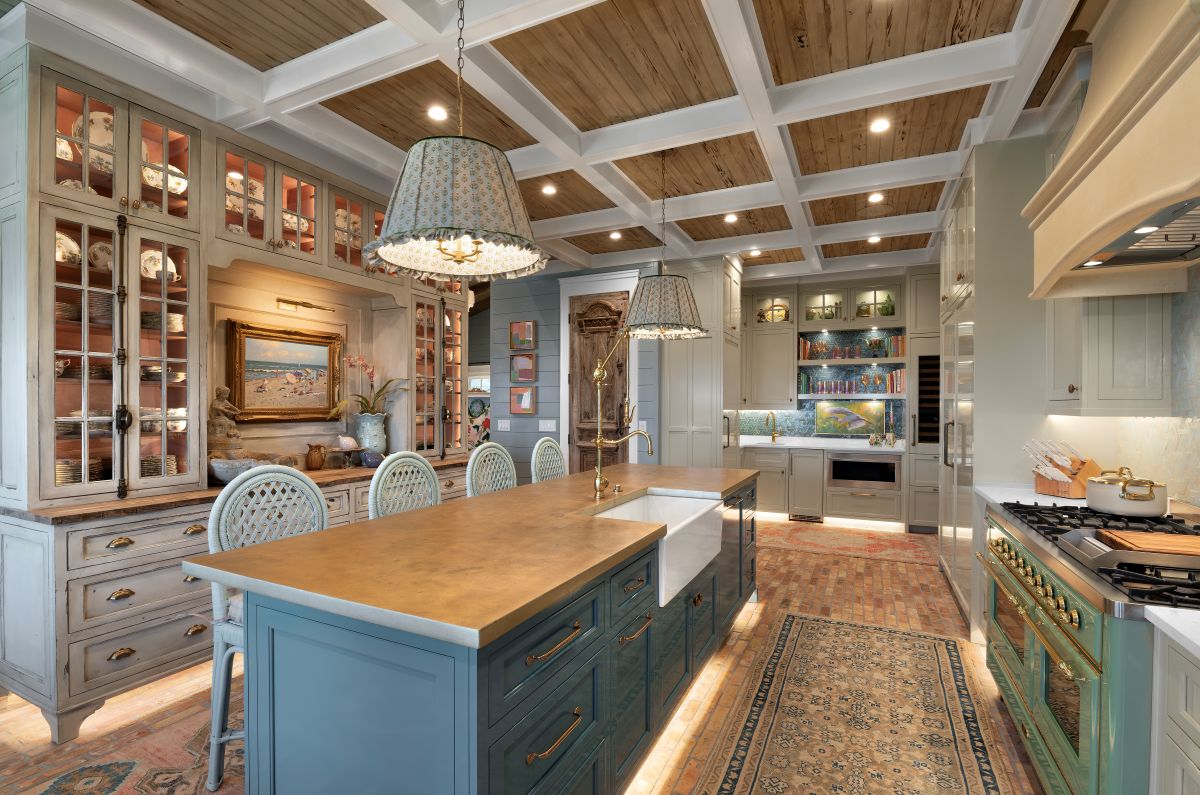
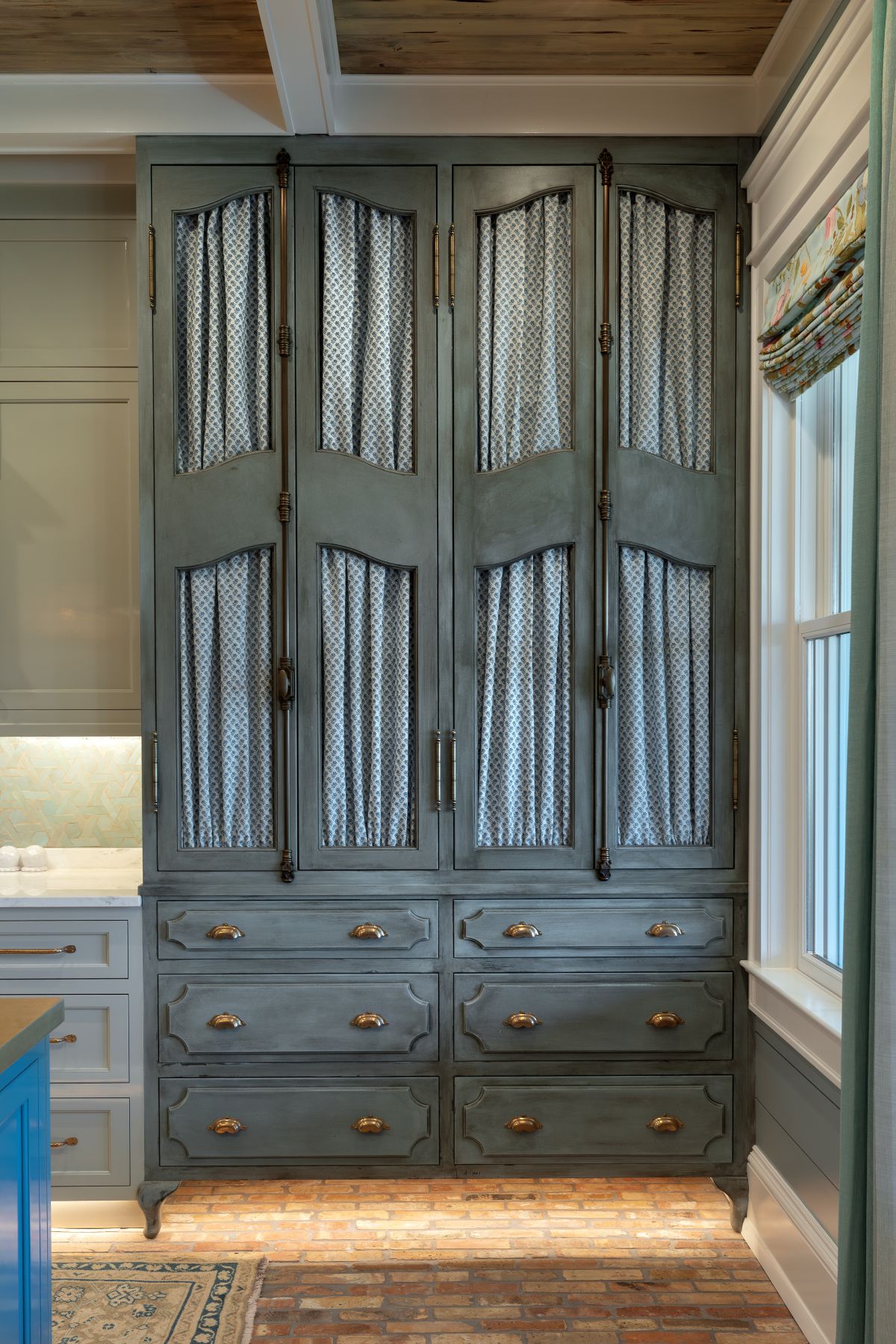
This kitchen color palette carries several colors at once. “She has so many differing shades of color on the cabinetry in that room,” Lance says. “She has salmon, she has light blue, she has light green, she has some earthy Moroccan tile on the wall.” Salmon shows up as painted interiors behind mullioned glass doors, where it glows behind the dishes rather than announcing itself, and the perimeter cabinets sit at a muted green-gray.
CHD handled the cabinet and furniture design, the lighting, and the countertops here, which let the cabinets work as separate pieces of furniture instead of one matched run. A distressed hutch wall and a blue-gray armoire with gathered fabric behind wire panels both look collected rather than installed.
Bringing Antiques to Palm Beach-Style Interior Design
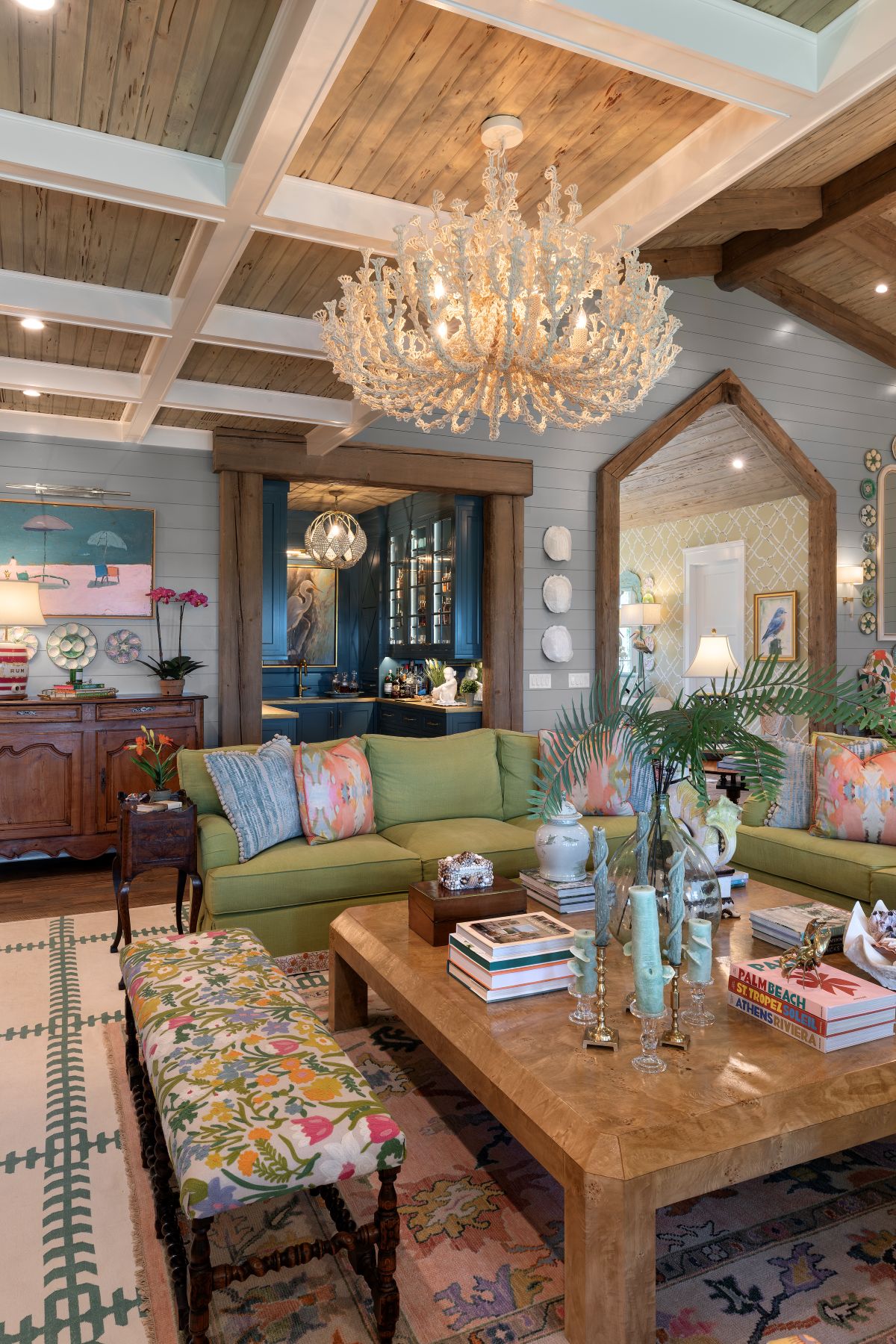
The client brought antiques of her own, and CHD added more from the antique furniture selection at our furniture showrooms. “It softens the bright colors,” Lance says. “With all the things that are going on, it makes it all much more accessible when you see that multi-layered antique vibe mixed with the more contemporary 50s-style Palm Beach furniture pieces. It’s truly one of the most eclectic jobs that I’ve worked on.”
Antique rugs do much of that work, appearing in nearly every room with their colors already faded down. Elsewhere it happens through single pieces: a painted bench in the foyer, a dark wood buffet in the living room, a carved wood door panel set into the kitchen wall. Each one brings age into a room where everything else looks new.
Using Scenic Wallpaper to Give Interior Rooms a View
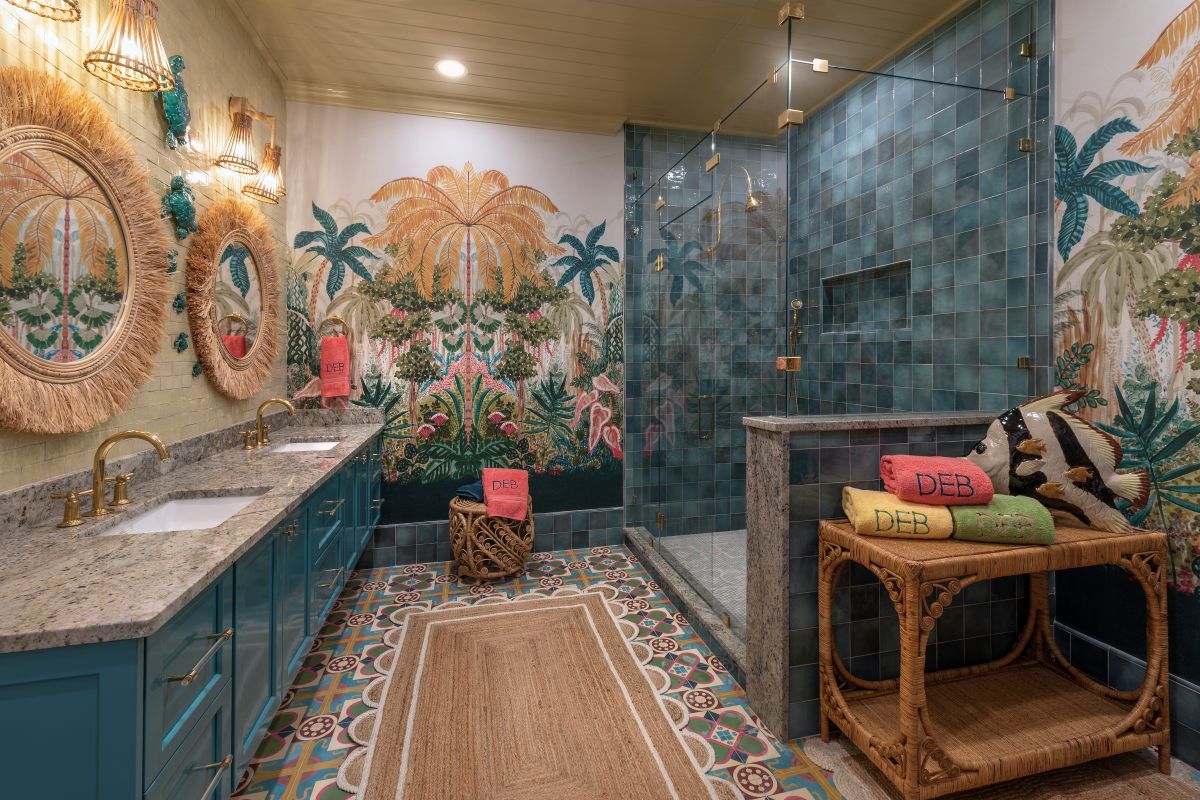
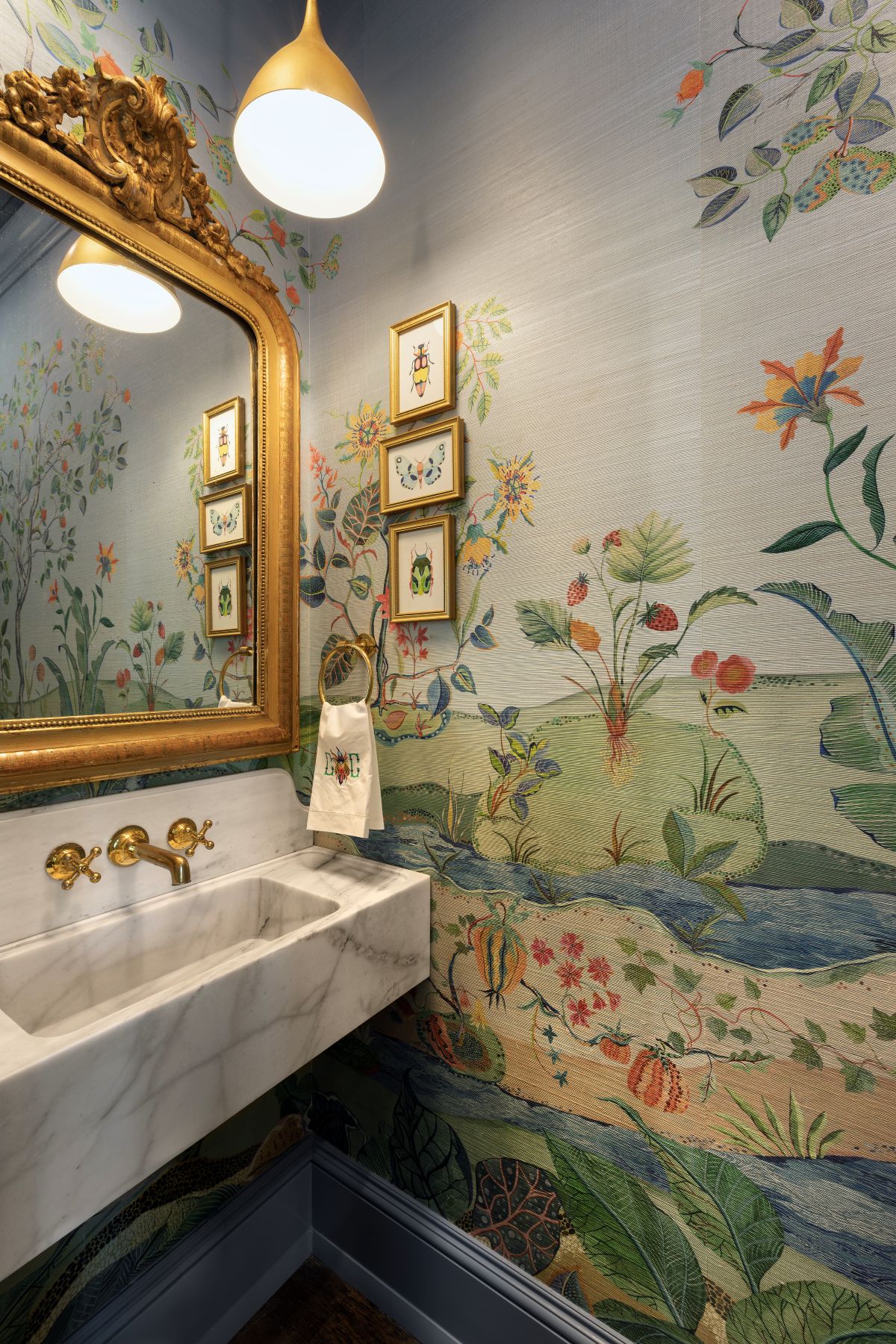
The powder room and one of the baths both wear a wallpaper pattern that reads as a single continuous scene instead of a repeating print. A garden landscape wraps the powder room, and a palm scene runs wall to wall in the bath.
Because the image never restarts, the eye follows it around the room rather than stopping at a seam, which makes a tight footprint feel considerably larger. It also offers a continuation of the home’s outdoor scenes and natural textures carried over into these rooms without windows.
Letting Individual Rooms Show Their Own Personality
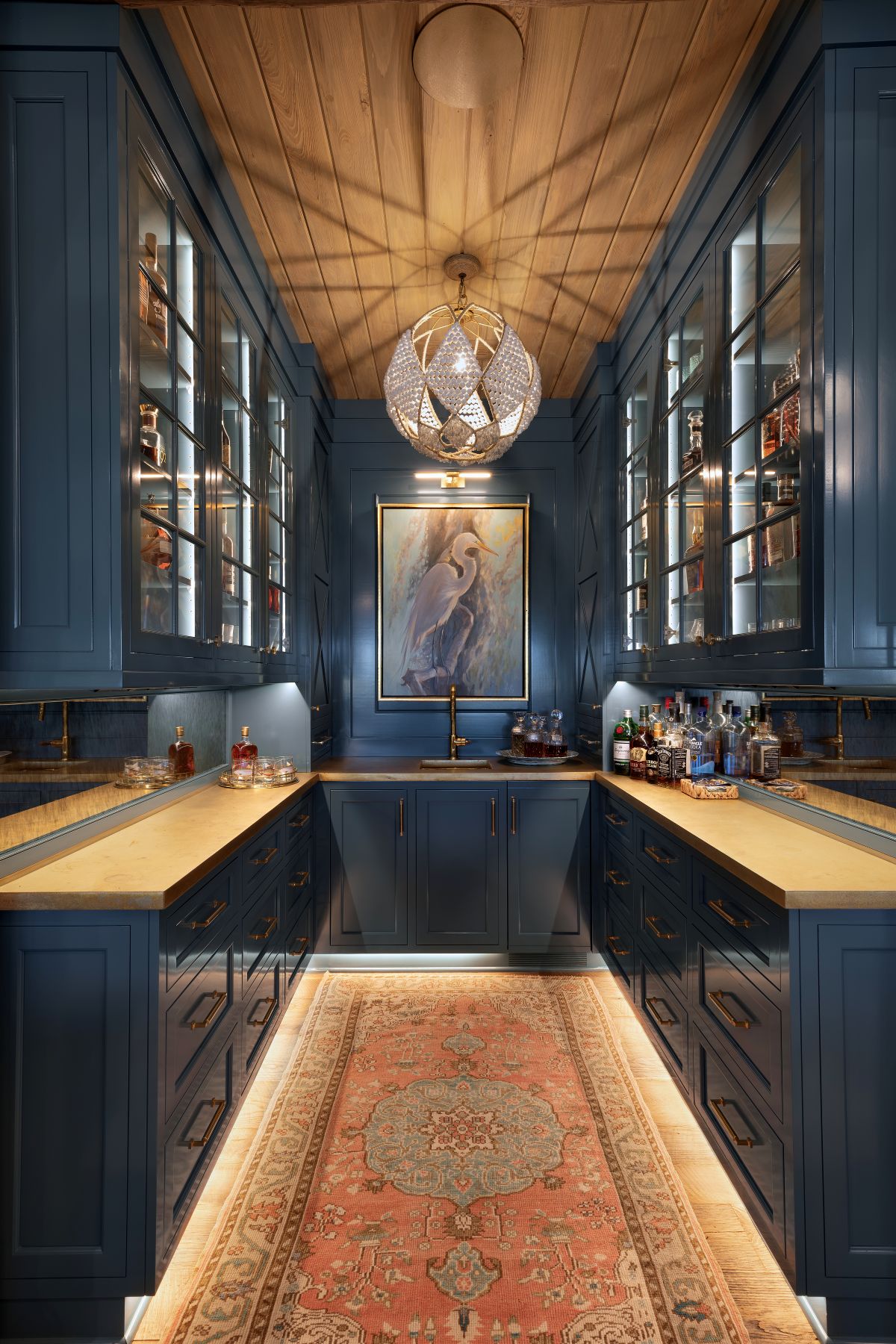
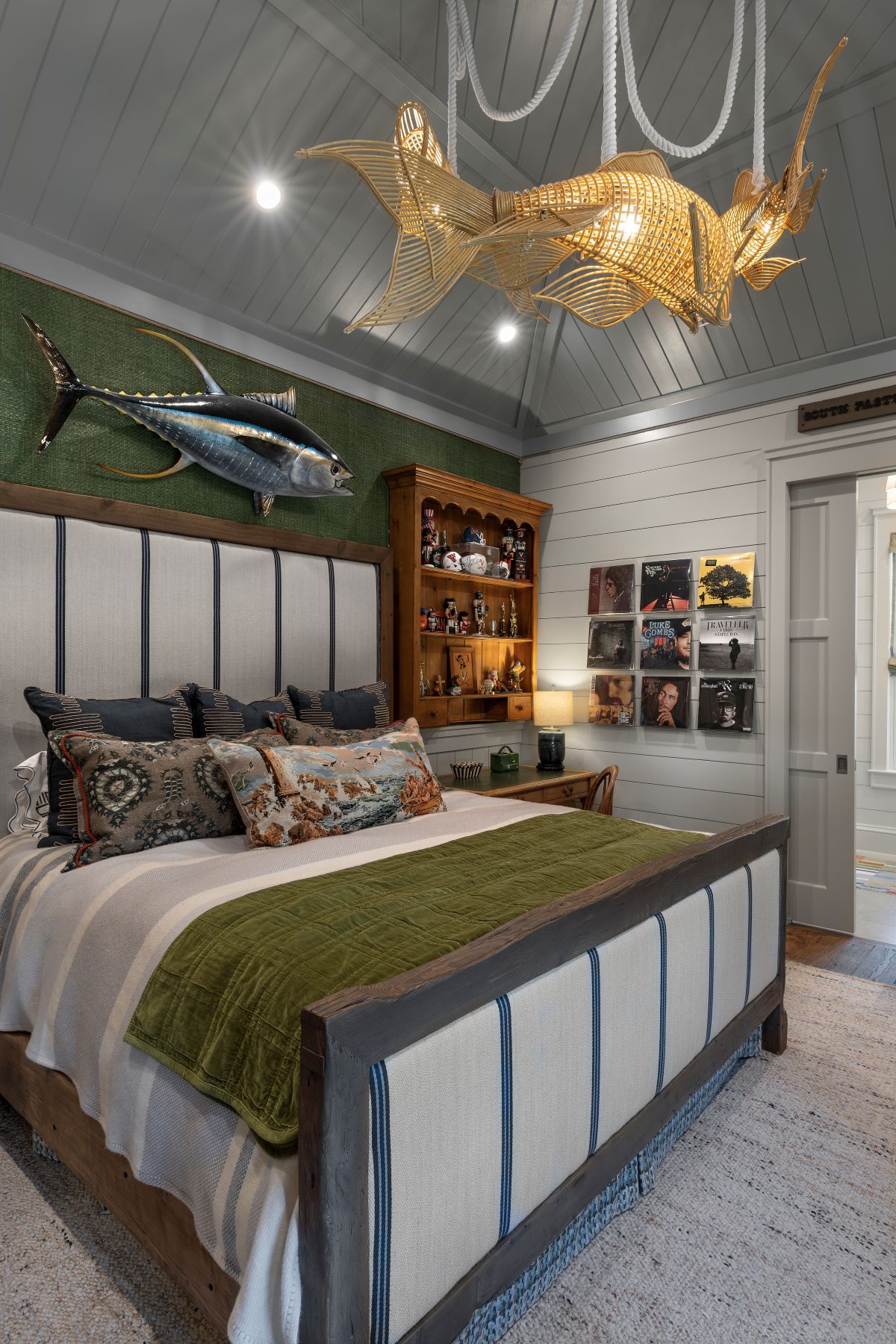
Two rooms in this house leave the pinks and mints behind entirely. Lance calls the bar a counterpunch: “It’s this one color-drenched, dark room where there’s none of that anywhere else in the house.” Navy cabinetry runs floor to ceiling, and a great blue heron painting hangs at the end of a room lit mostly by the glass-front uppers.
The son’s room takes a different exit, into green grasscloth, olive velvet, and navy ticking stripe under a gray plank vault ceiling. Neither room reads as an interruption, because both hold to the same materials found elsewhere: natural wood, woven fixtures, antique rugs. Continuity in materials buys a lot of freedom in color.
How to Try Palm Beach-Style Interior Design in Your Own Home
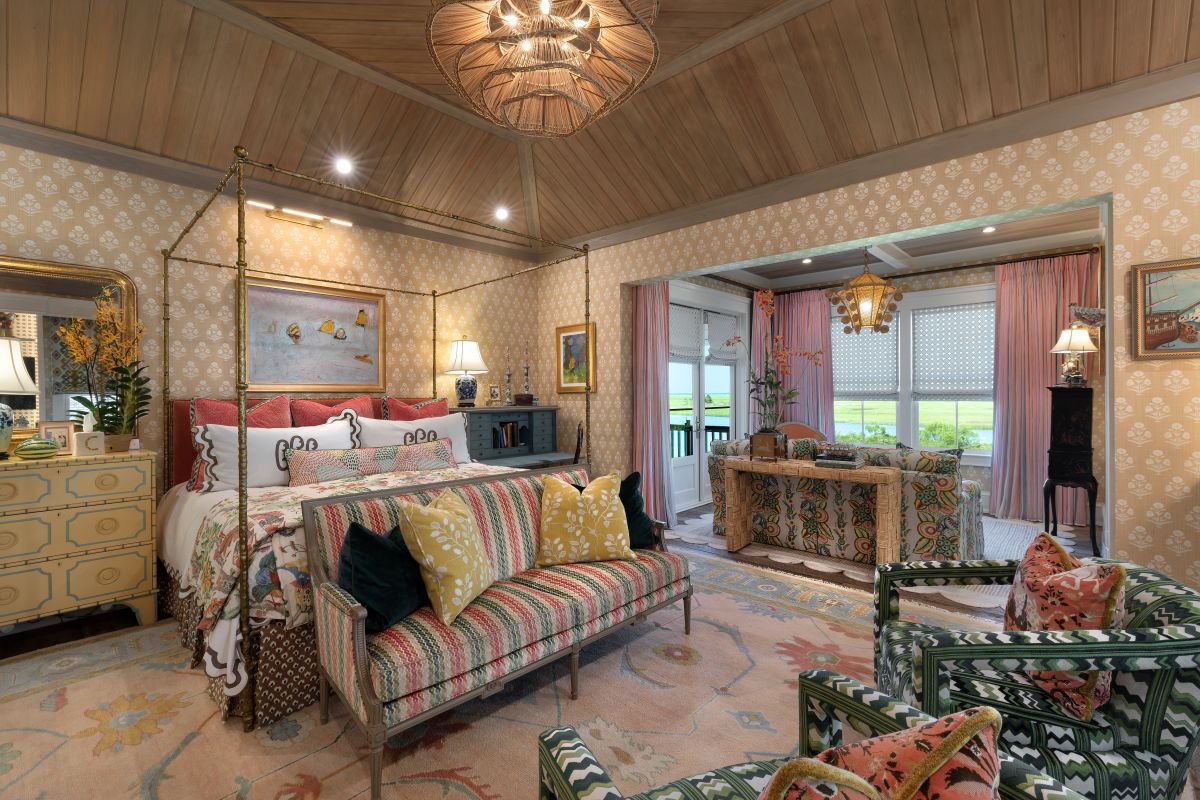
Lance’s advice comes down to one thing, and it applies whether you are furnishing a whole house or repainting a single room. “The greatest thing that anyone could take away from this home after seeing it is to not be afraid to use color, to not be afraid to mix patterns, and not be afraid to take a chance,” he says.
“People approach painting a bedroom like the world’s going to end if they don’t get the right color,” Lance says. “Paint colors are changeable. Pillow colors are changeable. So take a chance, because as much as you take a chance is how great your room can look.”
Interior Design in Georgetown and Across the Lowcountry
If this project caught your attention, there is more to see nearby. Our DeBordieu waterfront retreat covers a very different home in the same community, spanning more than 15,000 square feet across a main house, a guest house, and the waterfront exterior. You can also browse our full portfolio of interior design work in Georgetown, SC, to see how these ideas take shape in other homes along this stretch of coast.
Ready to talk about your own project? Get in touch with our design team or stop by the furniture showroom in Murrells Inlet and Mount Pleasant to see the antiques and furnishings in person.